






The Tree of Life Symbol: Meaning, Origins, and Jewelry
Present in countless civilizations for thousands of years, the Tree of Life is one of the most powerful and universal symbols. Both spiritual and philosophical, yet deeply human, it represents the connection between origins, the present moment, and the future.
Whether found in religious traditions, spiritual beliefs, or artistic expressions, the Tree of Life has endured through the ages as a timeless symbol of protection, growth, and transmission.
Through this article, we invite you to explore the meaning of the Tree of Life, its ancient origins, and the richness of its symbolism—explaining why it remains a highly valued motif in the world of meaningful jewelry and symbolic creations today.
What Does the Tree of Life Symbolize?
The Tree of Life symbol is based on a simple yet deeply meaningful image: a tree firmly rooted in the ground, rising upward toward the sky. This powerful representation carries a rich and universal symbolism.
- Roots symbolize origins, family, and grounding, highlighting the importance of foundations upon which each individual is built.
- The trunk, strong and stable, represents protection, inner strength, and the continuity of life.
- The branches, reaching toward the sky, embody growth, future aspirations, and openness to the world, while leaves and fruits evoke fulfillment, renewal, and abundance.
When asking what the Tree of Life means, the answer is multifaceted. It is a symbol of life itself, personal growth, wisdom, and transmission across generations.
This spiritual meaning of the Tree of Life explains why it is so often associated with universal values such as love, protection, balance, and harmony between body and mind.
The Ancient Origins of the Tree of Life Symbol
The origin of the Tree of Life dates back to the earliest human civilizations. Archaeological and artistic evidence shows that this symbol already existed thousands of years ago, particularly in Mesopotamia, Ancient Egypt, and pre-Columbian cultures.
In these societies, the meaning of the Tree of Life was closely linked to the idea of immortality and the connection between the earthly world and the celestial realm. The roots sank deep into the ground while the branches reached toward the sky, expressing a powerful link between the different dimensions of existence.
Over time, this Tree of Life symbolism spread across continents and cultures, preserving its core essence while gaining new interpretations. Even today, understanding the meaning of the Tree of Life means exploring a universal human story—one in which life, protection, and transmission hold a central place.
The Tree of Life in Major Religious Traditions
Present in many belief systems, the Tree of Life occupies a central role in numerous religious and spiritual traditions. While interpretations vary across cultures, its fundamental message remains the same: life, wisdom, and continuity.
In Christian tradition, the Tree of Life appears as early as Genesis, symbolizing eternal life and communion with the divine. It represents protection, peace, and harmony, while emphasizing the bond between humanity and God.
In Islamic culture, the tree is often associated with wisdom, creation, and the relationship between heaven and earth. This spiritual meaning of the Tree of Life highlights continuity and balance—core values within the faith.
In Buddhism, the Bodhi Tree, under which Buddha attained enlightenment, symbolizes knowledge, serenity, and spiritual awakening. Across these traditions, the Tree of Life symbol transcends religion to become a universal language of meaning and depth.
Why the Tree of Life Is a Universal Symbol
If the Tree of Life symbol spans civilizations and eras, it is because it is based on an image that is instantly understandable to all. The tree is a natural element shared by every culture, which explains why the tree as a symbol of life has become a universal representation.
Its roots, trunk, and branches visually express fundamental concepts such as grounding, growth, and evolution. This Tree of Life symbolism goes beyond cultural and religious differences to touch deeply human values: family, transmission, protection, and renewal.
This ability to speak to everyone—regardless of origin or belief—is what gives the meaning of the Tree of Life its universal and timeless power. It becomes a unifying symbol, capable of accompanying the most important stages of life.
The Tree of Life: A Powerful Symbol for Children
For children, the Tree of Life takes on a particularly meaningful dimension. It represents growth, development, and the future, while also embodying protection and the bond with family. This Tree of Life symbolism reflects childhood as a foundational journey, where the first roots of identity are formed.
Offering such a strong symbol to a child is a way of passing on a message of security and love. The roots emphasize the importance of origins, while the branches symbolize the many paths that will open throughout life. What does the Tree of Life represent, if not this promise of fulfillment and continuity?
For this reason, the Tree of Life is often chosen to accompany children from an early age—as a meaningful symbolic reference, designed to remain with them over time.
When to Gift a Tree of Life Jewelry Piece
Thanks to its rich symbolism, Tree of Life jewelry is traditionally given on especially meaningful occasions. It is often chosen to celebrate a birth, marking the arrival of a new life and the transmission of family values.
A baptism, whether religious or civil, is also a privileged moment. In this context, the Tree of Life symbol fully expresses its meaning, evoking protection, spirituality, and the bond between generations.
A birthday, particularly during childhood, is another ideal opportunity to offer Tree of Life jewelry, carrying a message designed to last over time.
Ultimately, this universal symbol stands out as a gift of transmission, chosen to accompany a child or a loved one throughout life. Offering jewelry inspired by the Tree of Life means giving far more than an object—it is passing on a story, an emotion, and a timeless symbol.
Why the Tree of Life Is So Often Represented in Jewelry
If the Tree of Life is so frequently expressed through jewelry, it is because it is a symbol meant to endure. Unlike an ephemeral representation, jewelry allows the Tree of Life symbolism to be anchored in time, worn close to the person who carries it.
Wearing Tree of Life jewelry means keeping a symbol of protection, balance, and continuity close at all times. Gold, with its nobility and durability, further reinforces this timeless dimension. It transforms the Tree of Life symbol into a precious object filled with meaning—capable of lasting through the years without losing its emotional value.
This sense of permanence also explains why Tree of Life gold jewelry is so often associated with major life milestones: birth, childhood, transmission, or remembrance. Jewelry thus becomes the ideal medium to express the depth of this universal symbol.
Celinni Tree of Life Jewelry
At Celinni, the Tree of Life is interpreted through a demanding jewelry-making approach, where every detail matters. Each creation highlights the delicacy of the motif, the quality of the materials, and the timeless elegance that defines the Maison.
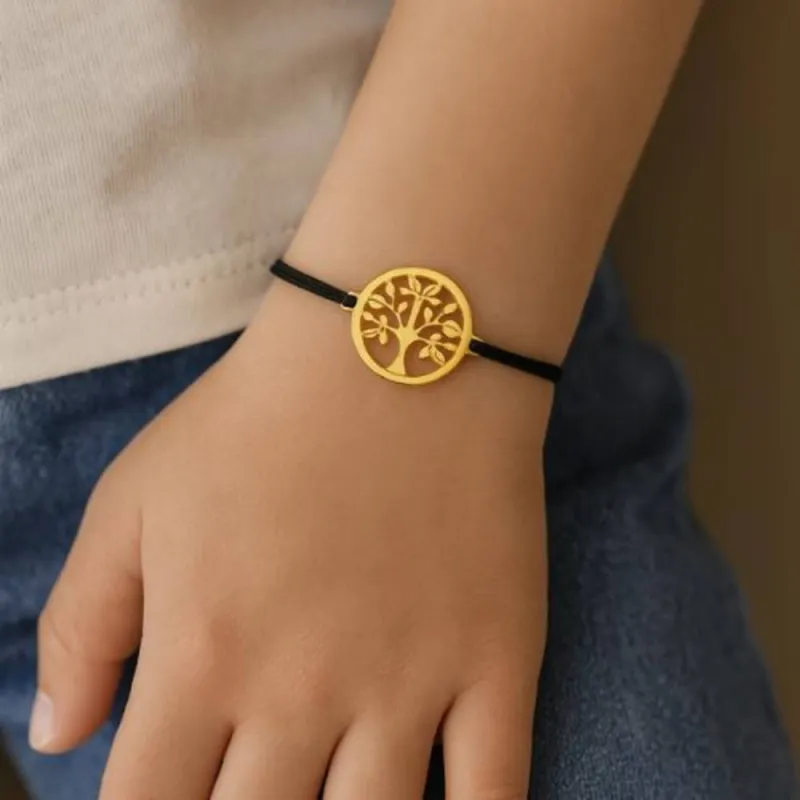
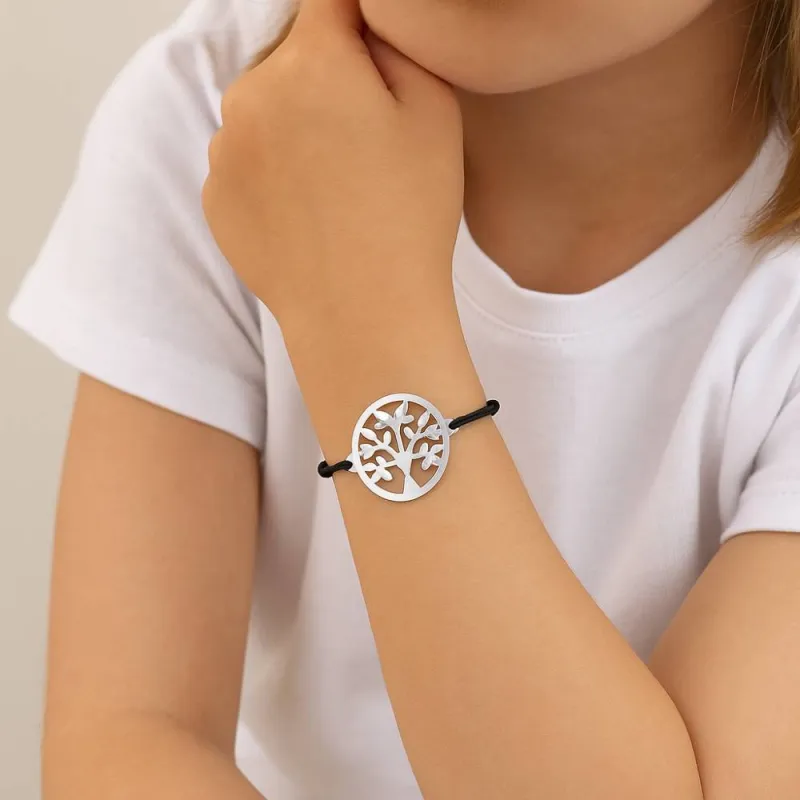
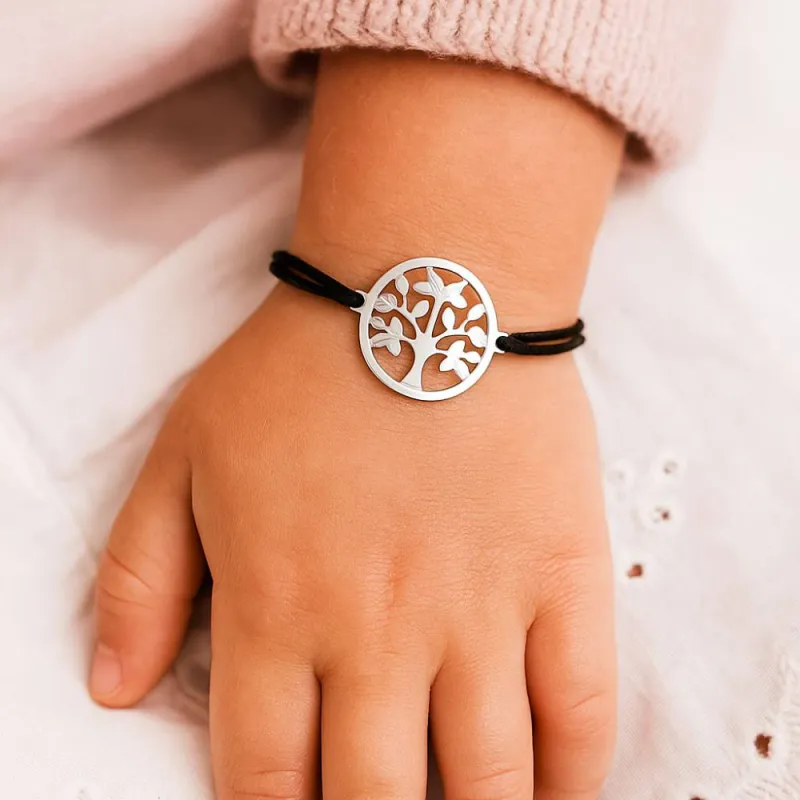
Designed to accompany childhood and moments of transmission alike, certain pieces combine the softness of a refined design with the strong symbolism of the Tree of Life. This is especially true for the Black Cord Tree of Life Bracelet in 18K Yellow Gold, the Black Cord Tree of Life Bracelet in 18K White Gold, and the Tree of Life Identity Bracelet, whose personal dimension deepens the emotional connection with the wearer.
Each Celinni Tree of Life jewelry piece is crafted to last, becoming a symbolic reference and naturally taking its place within a family story.
At What Age Should You Wear Tree of Life Jewelry?
One of the greatest strengths of the Tree of Life symbolism lies in its ability to accompany every stage of life. From birth or early childhood, it can be offered as a symbol of protection and love, marking the first roots of a child’s journey.
Over the years, Tree of Life jewelry takes on new meaning. It becomes a reference point, a memory, and sometimes even a personal talisman. In adulthood, it retains all its symbolic power, reminding the wearer of their origins, the path traveled, and the values passed down.
Ultimately, what does the Tree of Life represent, if not an evolving symbol—one that grows and endures alongside the person who wears it?
Tree of Life Jewelry: A Symbol of Transmission and Memory
Offering Tree of Life jewelry is first and foremost about passing on a meaningful message—one of family roots, love, protection, and continuity between generations. More than a simple ornament, it becomes a deeply emotional keepsake, often treasured for a lifetime.
This type of jewelry accompanies childhood memories, formative moments, and the invisible bonds that unite a family. Over time, it may be passed down, telling a silent yet profoundly meaningful story.
Through the symbolism of the Tree of Life, the jewel establishes itself as an object of memory and transmission, reflecting the idea that certain values—just like certain emotions—deserve to be preserved and shared.
FAQ – Everything You Need to Know About the Tree of Life Symbol
What Is the Meaning of the Tree of Life?
The meaning of the Tree of Life is based on the connection between origins, the present, and the future. It symbolizes life, growth, protection, and transmission. Its roots represent grounding and family, while its branches evoke evolution and openness to the world.
Is the Tree of Life a Religious Symbol?
The Tree of Life appears in several religious and spiritual traditions, but it is not exclusively religious. Above all, it is a universal symbol, shared across cultures, allowing it to be given and worn regardless of personal beliefs.
Why Give Tree of Life Jewelry?
Giving Tree of Life jewelry conveys a powerful message of protection, love, and continuity. This type of jewelry is often chosen to celebrate important life moments such as a birth, baptism, birthday, or a meaningful milestone.
Who Is Tree of Life Jewelry For?
Thanks to its timeless symbolism, Tree of Life jewelry can be worn at any age. It is especially popular for children, as a symbol of protection and family roots, while retaining its full emotional value in adulthood as a keepsake or heirloom piece.
Can Tree of Life Jewelry Be an Heirloom?
Yes, Tree of Life jewelry is often considered an heirloom piece. Due to its durability and symbolic depth, it accompanies childhood memories and can be kept and passed down through generations, becoming a true emotional legacy.
Round Diamond Engagement Ring Promesse
- -15%
Cushion Diamond Solitaire Ma vie
- -15%
Half Alliance Round Classic Diamonds Promesse
- -15%
Traditional Round Diamond River Bracelet
- -15%
Black Diamond Stud Earrings
- -15%