How Do Jewelers Select a High-Quality Diamond?
Choosing a diamond is a crucial step, whether for an engagement ring, a wedding band, or a custom-made piece of jewelry. Behind the brilliance of a stone lies a meticulous selection process, carried out by experts who evaluate far more than what is visible to the naked eye.
Contrary to popular belief, a diamond cannot be defined solely by its certificate or carat weight. Two stones with identical specifications can display completely different visual results. This is precisely why jewelers and diamond experts place such importance on the selection process, combining technical criteria with a trained eye developed through years of experience.
Understanding how professionals select a high-quality diamond not only helps you make an informed decision, but also allows you to avoid common mistakes. In this guide, we reveal the key criteria used by experts, along with lesser-known factors that make all the difference between a beautiful diamond… and an exceptional one.
Why Is Diamond Selection an Essential Step?
Selecting a diamond goes far beyond choosing a stone that simply looks “beautiful” or “brilliant.” It is a precise process that directly impacts the final quality of the jewelry, its durability, and its long-term value.
Every Diamond Is Unique, Even with Identical Specifications
Each diamond is a natural gemstone formed millions of years ago under unique conditions. Even when two diamonds share exactly the same characteristics on paper — same carat weight, color, and clarity — their appearance can vary significantly.
Subtle differences in proportions, cut quality, or internal structure can affect how light interacts with the stone. This is what makes every diamond truly one of a kind.
A Direct Impact on Brilliance and Visual Performance
The way a diamond is selected has a direct impact on its brilliance. A well-chosen diamond will capture and reflect light optimally, delivering the sparkle that makes it so desirable.
On the other hand, a poorly selected diamond may appear dull, even if it has strong specifications on its certificate. The difference often lies in details that are invisible to an untrained eye.
Why Not All Diamonds Are Equal
Not all diamonds available on the market offer the same level of quality. Some are carefully selected according to strict standards, while others are chosen based only on basic criteria.
This is where the role of the jeweler or diamond expert becomes essential. Their expertise allows them to sort, compare, and select only the stones that offer the best balance between beauty, quality, and value.
The 4Cs: The Essential Foundation for Selecting a Diamond
Before exploring the more advanced criteria used by professionals, it is essential to understand the fundamentals of diamond evaluation: the 4Cs. This international grading system classifies diamonds based on four key criteria.
Carat: The Weight of the Diamond
Carat refers to the weight of the diamond. The higher the carat, the larger and rarer the stone. However, carat alone does not define the beauty of a diamond.
A smaller diamond with an excellent cut can appear more brilliant than a larger stone of lower quality. This is why carat should always be considered in combination with the other criteria.
Cut: The Quality of the Cut
The cut is the most important factor in a diamond’s appearance. It directly influences how the stone reflects light.
A well-cut diamond will display superior brilliance, fire, and sparkle. On the other hand, a poorly cut diamond may appear dull, even if the other characteristics are strong.
Color: The Diamond’s Color Grade
Diamond color is graded on a scale from D (colorless) to Z (light yellow or brown tint). The more colorless a diamond is, the rarer and more valuable it becomes.
However, slightly lower color grades can offer an excellent balance between visual quality and budget, especially when carefully selected.
Clarity: The Purity of the Diamond
Clarity refers to the presence of internal inclusions or external imperfections. These natural characteristics vary in size, position, and visibility.
A high-quality diamond does not need to be perfectly flawless, but it should appear “eye clean,” meaning that no inclusions are visible to the naked eye — a key standard used by professionals.
What Jewelers Actually Analyze (Beyond the 4Cs)
While the 4Cs provide a strong foundation, they are not enough on their own to determine the true quality of a diamond. Jewelers and diamond experts go much further by analyzing technical and visual factors that are often not fully detailed on certificates.
Diamond Proportions: A Key Factor in Brilliance
Beyond the overall cut grade, experts carefully analyze the diamond’s proportions, including the table, depth, and the angles of the crown and pavilion.
These elements determine how light travels within the stone. Perfectly balanced proportions allow optimal light reflection, giving the diamond its full brilliance. In contrast, poor proportions cause light to leak, significantly reducing sparkle.
Symmetry and Polish: Precision of Craftsmanship
Symmetry refers to the perfect alignment of the facets, while polish indicates the quality of the diamond’s surface finish.
A diamond with excellent symmetry and high-quality polish will reflect light more effectively and deliver a sharper, more refined appearance. Although subtle, these criteria have a direct impact on the overall beauty of the stone.
Fluorescence: An Often Overlooked Criterion
Fluorescence describes how a diamond reacts under ultraviolet (UV) light. Some diamonds emit a soft bluish glow in these conditions.
In certain cases, strong fluorescence can slightly affect the diamond’s appearance in natural light, giving it a milky or hazy look. This is why professionals carefully evaluate this factor to avoid any unwanted visual effect.
The “Eye Clean” Effect: Visible Purity
Beyond clarity grades, experts assess whether a diamond is “eye clean,” meaning its inclusions are not visible to the naked eye.
This criterion is essential for optimizing budget without compromising appearance. A diamond with minor inclusions on paper can still look perfectly clean if it is well selected.
The Diamond’s Real Appearance in Light
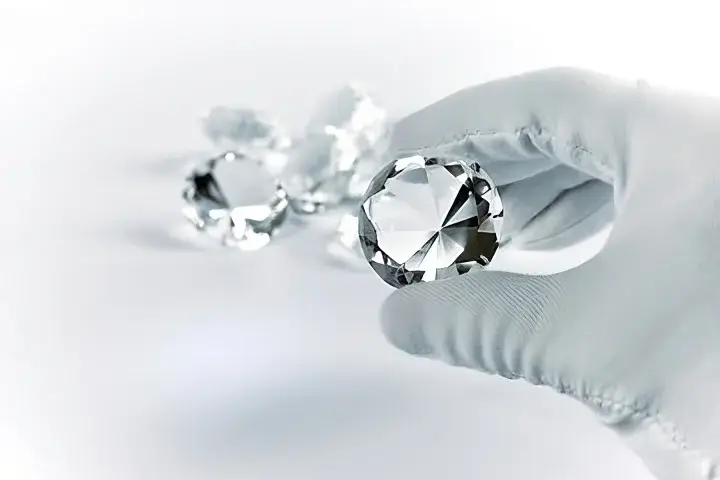
Finally, no technical specification can replace direct observation. Jewelers always examine a diamond under different lighting conditions to evaluate its brilliance, reflections, and overall liveliness.
It is this combination of technical expertise and visual assessment that allows professionals to select truly exceptional diamonds.
The Role of the Diamond Dealer and the Diamond Exchange
Behind every high-quality diamond lies a rigorous selection process carried out by a professional diamond dealer. Unlike the sale of standardized products, diamond sourcing is a dynamic process, directly connected to the global market.
What Is the Diamond Exchange?
The diamond exchange is an international marketplace where thousands of stones are traded in real time. It brings together professionals from around the world and provides access to an extremely wide and diverse selection.
It is within this market that diamond experts identify and select stones that meet precise criteria in terms of quality, price, and availability.
A Real-Time Selection Process
Unlike a fixed inventory, available diamonds are constantly changing. A stone can be sold within just a few hours.
This is why diamond dealers operate with a real-time selection approach, identifying the best opportunities at the exact moment a demand arises — especially when sourcing a diamond for an engagement ring or a bespoke piece.
Why Diamond Prices Constantly Fluctuate
The price of a diamond depends on multiple factors: its characteristics, rarity, and overall market conditions.
Two similar diamonds may have different prices depending on availability and demand at a given moment. This variability makes expert guidance particularly valuable when selecting the right stone at the right time.
Why Two Identical Diamonds Can Be Completely Different
It is common to assume that two diamonds with identical characteristics (carat, color, clarity, and cut) are equivalent. In reality, this assumption can be misleading.
The Influence of Cut on Brilliance
Even when two diamonds are graded with an excellent cut, slight variations in their proportions can significantly affect how they interact with light.
As a result, one diamond may appear brighter, more sparkly, or more “alive” than another, despite having identical specifications on paper.
The Importance of Invisible Proportions
Technical details such as crown height or pavilion depth directly influence a diamond’s visual performance.
These elements are not always noticeable to a buyer, but they are immediately identifiable by an experienced professional — and they make a crucial difference in the final appearance of a high-quality diamond.
The Role of Light and Environment
A diamond’s appearance also changes depending on the lighting conditions in which it is viewed: natural light, artificial lighting, or different environments.
A well-selected diamond will maintain its brilliance in all conditions, while a poorly chosen stone may lose its sparkle outside of optimized lighting.
How Does a Jeweler Choose the Right Diamond for a Client?
Selecting a diamond is not based solely on technical criteria. An experienced jeweler considers multiple factors to ensure the stone perfectly matches both the person who will wear it and the piece of jewelry being created.
Adapting the Diamond to the Budget
Budget is one of the first elements to consider. Rather than always aiming for the largest or most “perfect” diamond on paper, a jeweler focuses on optimizing each parameter to achieve the best possible visual result.
This may involve subtle adjustments, such as selecting a slightly lower clarity grade that remains invisible to the naked eye, or prioritizing an excellent cut to maximize brilliance. The goal is to offer a visually exceptional high-quality diamond without unnecessary compromises on budget.
Finding the Perfect Balance Between the 4Cs
A well-balanced diamond is often more beautiful than one that excels in only a single criterion. The jeweler’s role is to find the right harmony between carat, cut, color, and clarity.
For example, a slight variation in color may be imperceptible once the diamond is set, while an exceptional cut will significantly enhance its brilliance. This ability to balance the 4Cs is key to achieving the best overall result.
Considering the Jewelry Style
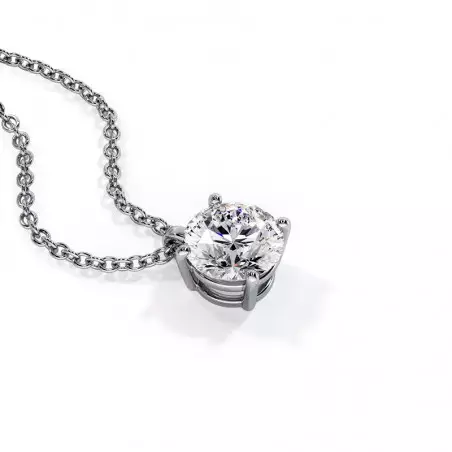
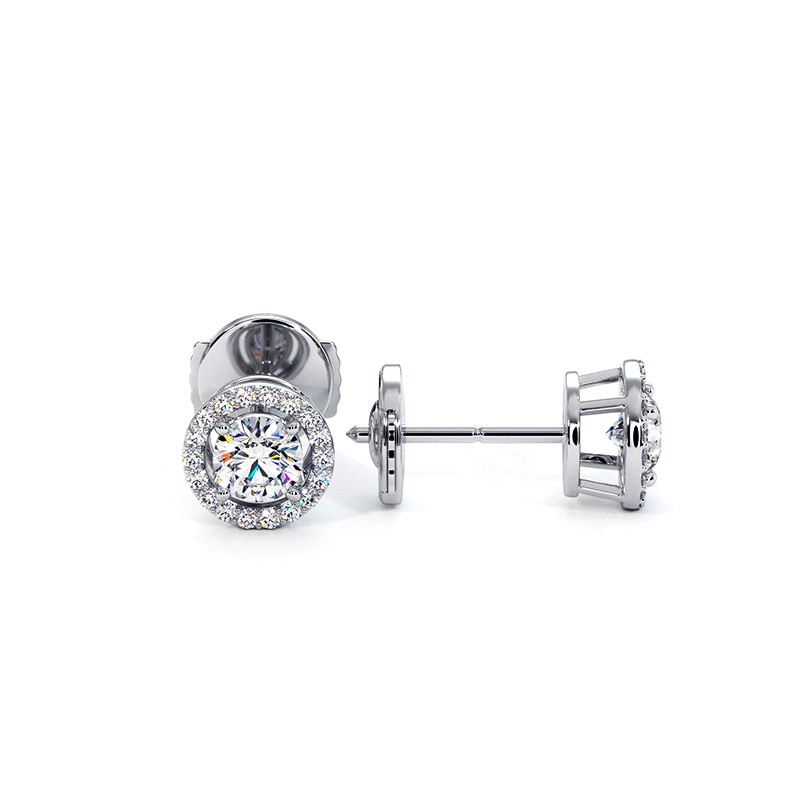
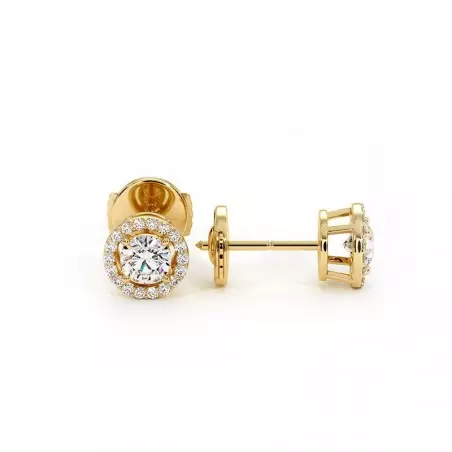
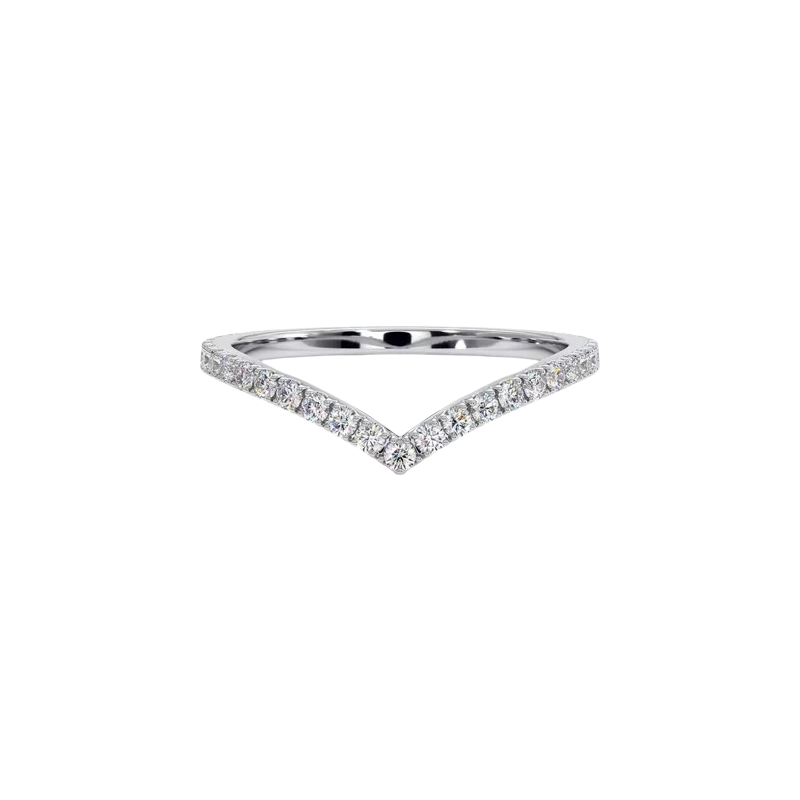
The choice of diamond also depends on the type of jewelry being created. An engagement ring, a pendant, or a pair of earrings each require different considerations.
Some settings are designed to enhance the diamond’s brilliance, while others require a specific balance between size and proportions. The jeweler therefore tailors the diamond selection according to the final design and the desired visual effect.
Why Work with an Expert Diamond Dealer?
Given the complexity of the diamond market, working with an expert diamond dealer offers a significant advantage. It ensures a secure purchase while providing access to a superior level of quality.
Access to a Wider and Higher-Quality Selection
A professional diamond dealer has direct access to an international network of stones, far beyond what is available in-store or online. This allows for the selection of diamonds that meet strict and precise quality standards.
Each diamond is individually selected, ensuring consistent quality and a high level of excellence.
Expert Interpretation of Diamond Certificates
Certificates issued by independent laboratories provide essential information, but they do not tell the whole story. An expert can interpret these details and identify subtle factors that influence the diamond’s appearance.
For example, they can detect less favorable proportions or poorly positioned inclusions, even when the overall grade appears satisfactory.
Saving Time and Securing Your Choice
Choosing a diamond can quickly become complex and time-consuming. With multiple criteria, price variations, and a wide range of options, it is easy to feel overwhelmed.
Working with a diamond expert saves time while ensuring a consistent, secure, and well-informed decision — especially when selecting a high-quality diamond for an important piece such as an engagement ring.
Mistakes to Avoid When Choosing a Diamond
When purchasing a diamond, certain mistakes are quite common, especially for those with limited experience. Understanding them helps you avoid costly errors and make a more informed decision.
Focusing Only on Carat Weight
Carat weight is often the first criterion people consider, but it does not guarantee a diamond’s beauty. A smaller diamond with an excellent cut will often appear more brilliant and visually appealing than a larger stone of inferior quality.
Neglecting the Quality of the Cut
Cut is the most important factor influencing a diamond’s brilliance. Overlooking this aspect can result in choosing a stone that lacks sparkle, even if the other characteristics are strong.
Prioritizing an excellent cut is essential to maximize light reflection and overall brilliance.
Buying Without Comparing Multiple Diamonds
Choosing a diamond without comparing several options can limit your perspective. Comparing different stones allows you to better understand variations in appearance and identify the one that offers the best balance.
Relying Solely on the Certificate
A certificate is a valuable tool, but it does not always reflect the diamond’s real visual performance. Two diamonds with identical specifications can look very different.
This is why it is essential to complement certification with visual inspection or expert advice.
FAQ – Diamond Selection
How Can You Tell If a Diamond Is High Quality?
A high-quality diamond is evaluated based on the 4Cs (carat, cut, color, clarity). However, these criteria alone are not always sufficient. It is also important to assess the stone’s real appearance, proportions, and brilliance under light. Working with an expert helps avoid common mistakes.
What Is the Most Important Criterion When Choosing a Diamond?
Among the 4Cs, cut is generally the most important factor. It directly influences the diamond’s brilliance. A well-cut diamond will reflect light more effectively, even if it is slightly smaller.
Is the Certificate Enough to Choose a Diamond?
No, a certificate provides a solid foundation but does not fully reflect the diamond’s actual appearance. Two diamonds with similar specifications can look very different. A visual assessment or expert guidance is therefore essential.
Why Can Two Diamonds with the Same Price Be Different?
The price of a diamond depends on many factors, some of which are not immediately visible. Proportions, cut quality, and actual brilliance can vary, explaining why two diamonds at the same price may look different.
Should You Work with a Diamond Expert?
Yes, working with a diamond expert gives you access to professional guidance, a wider selection of stones, and personalized advice. It ensures you choose a diamond perfectly suited to your budget and expectations.


.png)


.avif)