×

SHOPPING FROM

-15% on all our collections
-30% on a selection of diamond jewelry

Traceability of natural diamonds: what guarantees today?

- Categories : Diamond News Rss feed , Gemmology News Rss feed

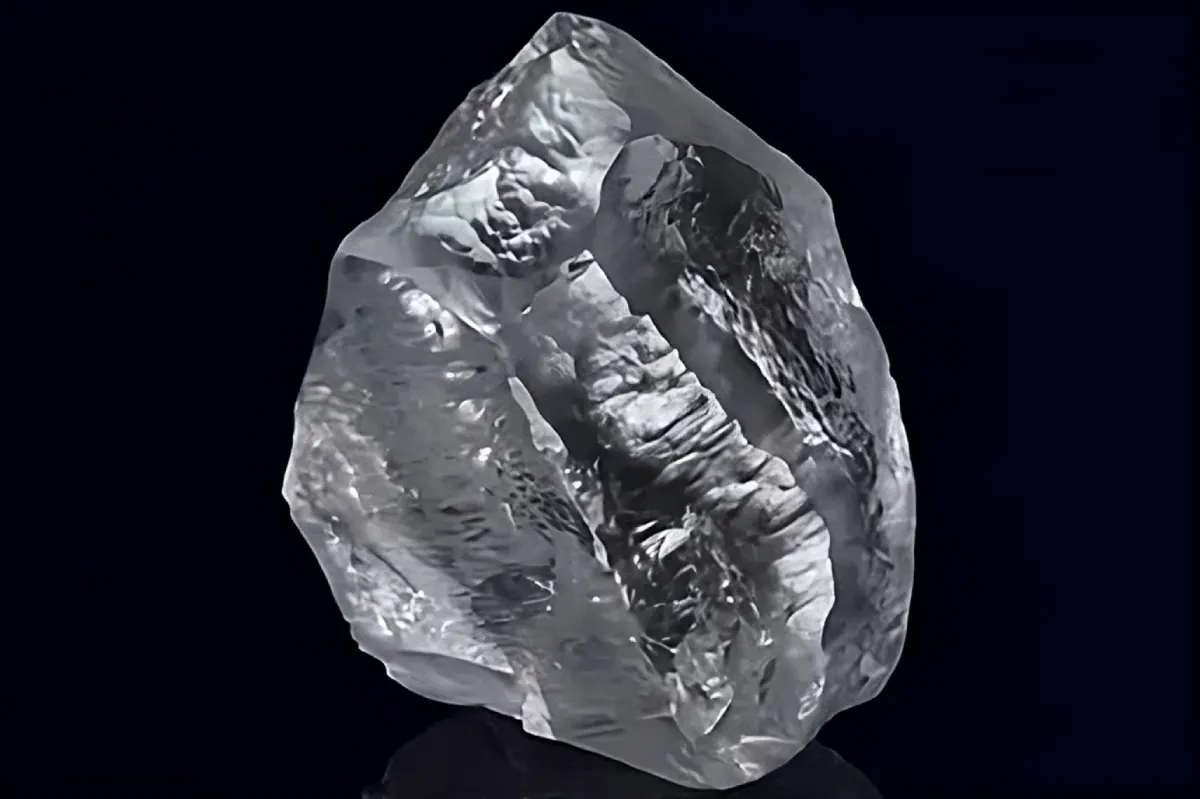
The natural diamond, an eternal symbol of love and prestige, has fascinated people for centuries with its brilliance and rarity. But behind this beauty lies an essential question: where does the stone we wear on our finger or around our neck truly come from? The traceability of diamonds has become a crucial issue for both buyers and jewelers. It is not limited to guaranteeing the authenticity of a stone: it also embodies an ethical, transparent, and responsible approach.

Today, consumers are looking for more than just an exceptional piece of jewelry: they want a clear story and a certified origin, far from the shadows associated with so-called “conflict diamonds.” Initiatives such as the Kimberley Process, as well as modern technologies like blockchain, reinforce this demand for transparency. At Celinni, a specialist in certified natural diamonds, traceability is at the very heart of our commitment to each client.

Why is traceability a major issue for natural diamonds ?

Traceability meets two fundamental expectations: the authenticity security and the ethical guarantee.

A historical issue

At the end of the 20th century, the scandal of “conflict diamonds” revealed the involvement of certain precious stones in financing civil wars, particularly in Africa. Since then, the diamond industry has had to restore its image by proving the legitimate origin of its stones.

A requirement of modern buyers

Today, acquiring a diamond is not just about choosing a shiny stone. Couples in search of an engagement ring or wedding band want to be sure that their diamond symbolizes only love and purity, and not exploitation or violence. Therefore, transparency becomes a key factor of trust.

Differentiate natural diamond from laboratory diamond

In short, traceability is not just a technical guarantee: it is a symbolic value that connects the diamond to its history, its authenticity, and its heritage.

In a market where synthetic diamonds are multiplying, traceability also plays a decisive role in distinguishing a 100% natural stone from a laboratory-created diamond. At Celinni, every diamond is accompanied by a certificate of origin and quality issued by renowned laboratories (GIA, HRD, IGI).

In short, traceability is not only a technical guarantee: it is a symbolic value that connects the diamond to its story, authenticity, and heritage.

The Kimberley Process: first pillar of traceability

In response to the scandals surrounding “conflict diamonds” in the 1990s, the international community had to act. In 2003, the Kimberley Process Certification Scheme was established to clean up the global diamond trade.

Its principle is simple: no rough diamond can be exported or imported without an official certificate proving that it does not finance armed conflicts. Today, over 80 countries participate in this system, representing the overwhelming majority of global diamond production.

The Kimberley Process thus constitutes the first pillar of traceability. It helps block the entry of stones from dubious sources and reassures buyers.

However, this system also has its limitations:

  • Inspections are not always uniform across countries.
  • Some gray areas remain, allowing a few non-compliant diamonds to circulate.
  • The process only covers rough diamonds, sometimes leaving uncertainties in the stages of cutting, polishing, and commercial distribution.

Despite these weaknesses, the Kimberley Process remains a crucial milestone in securing the supply chain and has contributed to significantly reducing the trade in conflict diamonds.

Towards enhanced traceability thanks to technology

While the Kimberley Process was a first step, consumer expectations today go much further. In an increasingly digital world, technology has emerged as a powerful tool to ensure complete traceability of diamonds, from the mine to the finished jewelry piece.

One major innovation is the use of blockchain. This distributed ledger technology allows each stage of a diamond ’s journey to be tracked: extraction, cutting, polishing, certification, and sale. Every piece of information is recorded in an immutable way, ensuring total transparency.

Leading diamond companies like De Beers have already launched their own blockchain-based traceability platforms (e.g., the Tracr project). The goal is clear: to provide buyers with a unique, tamper-proof digital proof of the origin and journey of their stone.

Beyond blockchain, other innovative solutions are emerging:

  • Microscopic laser engravings on the diamond linked to its certificate.
  • Isotopic and chemical analysis that can trace the stone back to its region of origin.

Thanks to these advances, the traceability of natural diamonds is not only more reliable but also more accessible to the end consumer. It marks a new step toward responsible, transparent, and sustainable jewelry.

Ethical sourcing and responsible initiatives

Beyond regulatory and technological frameworks, the traceability of natural diamonds also relies on an ethical commitment from players in the jewelry industry. Today, several initiatives help strengthen this approach:

  • Responsible Mines: Some countries, such as Botswana or Canada, have become benchmarks for ethical mining, with high standards for safety, worker rights, and environmental protection.
  • Responsible Jewellery Council (RJC): This international organization sets strict social and environmental responsibility standards for companies in the sector.
  • Independent Certification Laboratories: GIA, HRD, and IGI play a key role by issuing compliance certificates that not only verify the gemological characteristics of the diamond but also its commercial legitimacy.

These initiatives provide an additional guarantee for consumers who want to purchase a natural diamond with confidence, ensuring their jewelry comes from a sustainable and ethical supply chain.

What concrete guarantees for the Celinni buyer ?

At Celinni, transparency and ethics are at the heart of every jewelry creation. Buyers benefit from clear and verifiable guarantees:

  • An authenticity certificate issued by recognized laboratories (GIA, HRD, IGI), ensuring the gemological quality and origin of the diamond.
  • Exclusively natural diamonds, carefully selected by our expert gemologists, never lab-grown stones.
  • manufacturing in gold 18K, made in our Parisian workshop under the supervision of master jewelers.
  • Total transparency regarding the origin and journey of the diamond, allowing each client to connect their jewelry to a clear and responsible story.
  • Personalized support, from stone selection to bespoke creation, offering much more than a piece of jewelry: a true promise of trust.

These commitments enable Celinni to stand out as a jewelry house that combines tradition, excellence, and responsibility.

FAQ: Traceability of natural diamonds

  1. What is the traceability of a natural diamond ?
    The traceability of a natural diamond involves tracking and documenting every stage of a stone’s journey, from extraction in a certified mine to its sale in jewelry. It guarantees the authenticity, ethical origin, and quality of the diamond.
  2. What is the Kimberley Process ?
    The Kimberley Process is an international certification system established in 2003 to prevent the trade of “conflict diamonds.” It requires that every exported or imported rough diamond be accompanied by an official certificate ensuring that it does not finance wars.
  3. How does blockchain strengthen diamond traceability?
    Blockchain allows for the tamper-proof recording of all transactions. Steps in the journey of a diamond: extraction, cutting, polishing, certification and sale. This technology offers buyers total transparency and digital proof of the origin of their stone.
  4. How to differentiate a natural diamond from a laboratory diamond ?
    A natural diamond forms in the Earth’s crust over millions of years, whereas a lab-grown diamond is artificially created in a few weeks. Traceability and gemological certificates (GIA, HRD, IGI) ensure that a stone is 100% natural.
  5. What concrete commitments does Celinni offer in terms of traceability ?
    Celinni offers exclusively certified natural diamonds, accompanied by authenticity certificates issued by independent laboratories. Each stone is selected by expert gemologists and set in 18K gold in our Parisian workshop, guaranteeing transparency and excellence.

Conclusion

The traceability of natural diamonds is no longer optional—it is a necessity. It meets a dual requirement: protecting consumers from fraud and ensuring an ethical and environmentally responsible supply chain.

With measures like the Kimberley Process, technological innovations such as blockchain, and the involvement of committed industry players, the diamond sector is moving toward unprecedented transparency.

By choosing Celinni, you select a certified natural diamond, handcrafted 18K gold creations, and a jewelry house that places trust at the heart of its mission. Each piece of jewelry thus becomes not only a symbol of eternal love but also a conscious and responsible choice.

Discover our products now engagement rings and natural diamond rings, and treat yourself to a piece of jewelry that combines brilliance, authenticity, and traceability.

Share this content