Why Is Glass Broken During Jewish Wedding Ceremonies?
,
Jewelry News
A Jewish wedding is a deeply symbolic ceremony, where every gesture carries a precise and ancient meaning. Under the chuppah, surrounded by family and friends, the couple celebrates their union in a moment that is both solemn and joyful. Yet at the heart of this celebration, one gesture often surprises guests: the groom crushes a glass under his foot.
Many people wonder about the meaning of a broken glass at a Jewish wedding. Why associate an act of breaking glass with a moment of pure happiness? This centuries-old tradition sparks curiosity and leads many to explore the deeper meaning of breaking a glass and the spiritual symbolism behind this ritual.
Far from being anecdotal, the breaking of the glass is one of the most powerful moments of the ceremony. It embodies historical, religious, and symbolic depth that goes far beyond simply breaking glass. To truly understand this custom, we must look back to the very foundations of Jewish tradition.
Where Does the Tradition of Breaking the Glass Come From?
The tradition of breaking the glass originates in the teachings of the Talmud and dates back many centuries. It was established as a way to balance the intense joy of marriage with a moment of collective remembrance.
According to tradition, breaking a glass during the ceremony commemorates the destruction of the First and Second Temples in Jerusalem. Even in life’s happiest moment, the memory of a tragic event must be preserved. In this way, joy is never entirely disconnected from the history of the Jewish people.
Some historians also suggest that the act once symbolized the official end of the engagement period and the irreversible transition into marriage. In this context, the meaning of breaking a glass also reflected a definitive commitment: like shattered glass, marriage cannot be undone without leaving a trace.
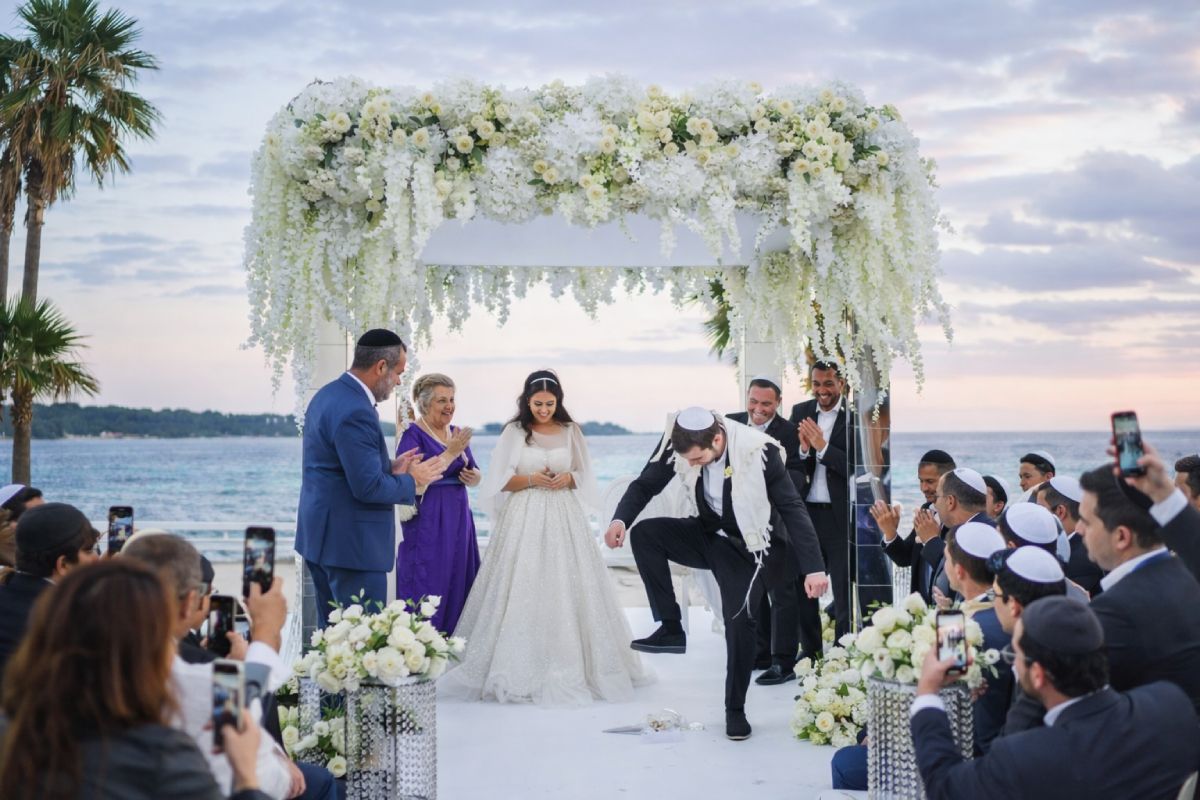
Today, this tradition is still observed at Jewish weddings around the world, whether Orthodox, traditional, or modern. The glass is usually wrapped in cloth for safety and then firmly crushed under the groom’s right foot, just before the guests joyfully exclaim, “Mazal Tov!”
What Is the Meaning of Breaking the Glass?
The meaning of breaking a glass at a Jewish wedding is multifaceted and deeply symbolic. Far from being a simple tradition, it carries spiritual, emotional, and historical significance.
A Reminder of Life’s Fragility
Glass, transparent and delicate, represents the human condition. By breaking it, the couple acknowledges that life itself can be fragile and that happiness must be preserved with awareness and responsibility.
This spiritual breaking glass meaning reflects the idea that love must be protected, nurtured, and respected over time.
The Irreversibility of Commitment
Once shattered, glass cannot be restored to its original form. The meaning of breaking a glass highlights the permanent nature of marital commitment. Marriage is not merely a contract; it is a lasting promise built on trust, loyalty, and devotion.
Just like broken glass leaves visible traces, marriage carries weight and significance that cannot be undone without consequence.
Memory and Transmission
The breaking of the glass is also an act of transmission. It connects past generations to new unions, reminding the couple that they are part of a history greater than themselves.
In this perspective, the meaning of a broken glass goes beyond the gesture itself. It becomes a symbol of identity, continuity, and collective responsibility within the Jewish community.
When Is the Glass Broken During the Ceremony?
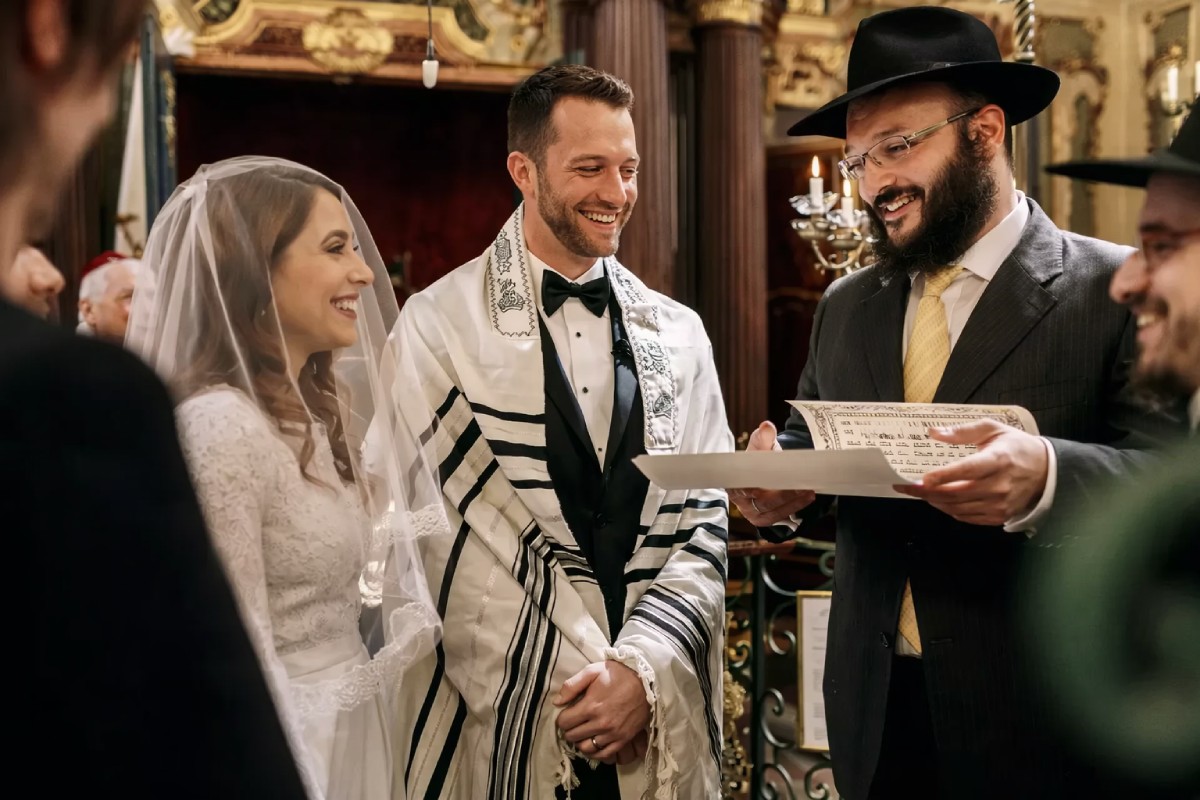
The breaking of the glass takes place at a very specific moment in the Jewish wedding ceremony. It occurs under the chuppah, the wedding canopy symbolizing the couple’s future home.
After the final blessings and the exchange of rings, the groom — and in some modern ceremonies, both partners — crushes the glass wrapped in protective cloth.
This gesture marks the official conclusion of the religious ceremony. Immediately after the sound of breaking glass, the guests traditionally shout “Mazal Tov,” a Hebrew expression meaning “Congratulations” or “Good fortune.”
The contrast between the solemn silence preceding the act and the joyful eruption that follows intensifies the emotional impact of the moment. The sound of the shattered glass acts as a signal: it seals the union and symbolically opens the celebration.
In some families, pieces of the broken glass are kept as a keepsake, sometimes incorporated into decorative objects or framed as a memory. This detail illustrates how the ritual extends beyond the ceremony itself and becomes part of the couple’s shared history.
Why Does This Tradition Continue Today?
In an era of contemporary weddings, where ceremonies evolve and adapt to modern lifestyles, breaking the glass at a Jewish wedding remains almost universal. Why does this tradition continue to endure across generations?
First, because it embodies a strong cultural identity. It connects the couple to a millennia-old heritage and to a broader community. Even in secular or modernized weddings, this gesture remains a powerful symbolic anchor.
Second, it fulfills a universal need: giving deeper meaning to commitment. Marriage is not only a festive celebration; it is also an act of responsibility and construction. The broken glass reminds the couple that love requires awareness, strength, and lasting dedication.
Finally, the tradition persists because it offers a profoundly human dimension to marriage. It acknowledges that life is not free from trials, yet union is built precisely through this awareness. This contemporary interpretation gives the ritual a timeless relevance.
In a world where ceremonies can sometimes become purely aesthetic, the breaking of the glass preserves rare symbolic depth. It reminds us that behind every exchanged ring lies a thoughtful and deliberate promise.
Wedding Traditions Around the World
While breaking the glass at a Jewish wedding is one of the most iconic rituals of the ceremony, many cultures across the world also include powerful symbolic gestures.
In India, Hindu weddings feature the Saptapadi, the seven sacred steps taken around the fire, symbolizing the couple’s mutual vows and lifelong commitments.
In certain Greek traditions, guests throw rice or sugared almonds to wish the newlyweds prosperity and fertility.
In Muslim weddings, the henna ceremony often precedes the union, representing protection, blessing, and joy.
In Western Christian ceremonies, the exchange of wedding rings is the central moment, materializing eternal commitment.
Although these traditions differ in form, they share a common purpose: symbolically expressing union, continuity, and the promise of a shared future.
Across cultures, marriage is never a simple contract. It is a rite of passage, a public commitment, and a foundational act. Every ritual — whether it involves breaking a glass, lighting a candle, or exchanging rings — aims to make an invisible promise visible.
FAQ – Breaking the Glass at a Jewish Wedding
Why is a glass broken at a Jewish wedding?
A glass is broken to commemorate the destruction of the Temple in Jerusalem and to maintain historical awareness even in moments of great joy.
The meaning of breaking a glass carries strong spiritual symbolism, reminding the couple that happiness exists within collective memory and shared history.
Who breaks the glass during the ceremony?
Traditionally, the groom breaks the glass at the end of the ceremony under the chuppah.
However, in some contemporary Jewish weddings, both partners may participate in the ritual.
At what moment is the glass broken?
The glass is broken after the final blessings and the exchange of rings, marking the official conclusion of the religious ceremony.
Immediately afterward, guests joyfully exclaim “Mazal Tov.”
What is the spiritual meaning of a broken glass?
The spiritual meaning of a broken glass refers to the fragility of life, the irreversibility of commitment, and the responsibility the couple holds toward their union.
Once shattered, glass cannot be restored to its original form — just as a solemn promise must be honored and protected.
Can this tradition be personalized?
Yes. Some couples choose a specific type of glass or preserve the broken shards as a keepsake.
Although the ritual itself remains structured, its interpretation can adapt to modern sensibilities.
Conclusion
The breaking of the glass at a Jewish wedding is neither a simple symbolic gesture nor a decorative tradition. It is a powerful reminder that love is rooted in a broader story — one shaped by memory, responsibility, and transmission.
In a moment of intense joy, the shattered glass introduces awareness: the fragility of life and the strength required to build a lasting union.
Through this ancestral ritual, marriage takes on deeper meaning. It does not merely celebrate emotion; it affirms a thoughtful, deliberate commitment oriented toward the future.
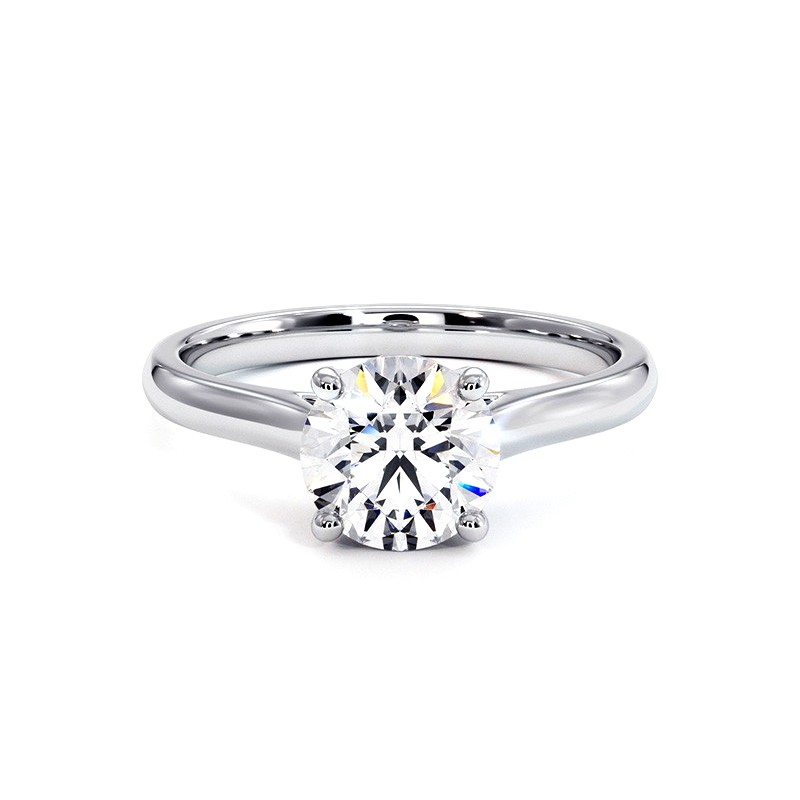
Like the wedding ring exchanged under the chuppah, symbolizing an unending bond, the act of breaking the glass reminds us that every promise deserves to be protected, honored, and passed on.
You May Also Like
How to Choose a Diamond Bracelet for Women?
How to Measure Your Finger Size for a Ring?
What to Engrave on a Wedding Band? Ideas and Tips for a Meaningful Engraving
Gift Ideas for a Pregnant Woman: 37 Thoughtful Ideas to Delight in 2025


.png)


.avif)