






DIAMOND GUIDE
Learn and understand to buy a natural diamond with full awareness!
Diamonds remain a mystery to many buyers. To help you choose your stone with confidence, Celinni, an expert in certified natural diamonds since 1967, has brought together the 22 essential questions you need to consider when choosing the right diamond, whether you are creating a piece of jewellery or starting a collection.
Composition, hardness, the 4Cs, certification and price: follow our diamond guide to understand every characteristic that determines a diamond’s quality — and therefore its value.
What Is a Diamond and How Is It Formed?
A diamond is a rare mineral composed entirely of carbon, formed under extremely high pressures and temperatures deep beneath the Earth’s surface. It is extracted from a rock known as kimberlite, which originates from magma. Although this basic composition may seem simple, the extreme conditions required for diamond formation make it one of the rarest materials on our planet.
Because of its exceptional hardness, diamond also has numerous industrial applications beyond its use in fine jewellery.
What Is the Life Cycle of a Diamond?
Natural diamonds are mined primarily in South Africa, Botswana, Namibia, Canada and Russia. Rough diamonds are then mainly traded in Antwerp before being exported to India, where they are transformed into gemstones for use in jewellery: 12 out of 15 diamonds are cut and polished in Surat.
Once cut, diamonds are submitted to a gemmological laboratory for certification before being exported to the various international diamond exchanges.
Understanding the complete diamond life cycle will help you make an informed decision when choosing the ideal stone.
Is a Diamond Unbreakable?
Diamond is the hardest naturally occurring material known, with a hardness rating of 10 on the Mohs scale, the standard scale used to measure mineral hardness. This means that a diamond can only be scratched by another diamond. However, hardness does not mean indestructibility: a diamond can still chip or break if subjected to a sufficiently strong impact.
The 4Cs of Diamonds: The Essential Quality Criteria
The 4Cs represent the four main criteria used to assess a diamond. Their name comes from the initials of the four key characteristics:
Carat: the weight of the diamond
Color: the color grade of the diamond
Clarity: the clarity of the diamond
Cut: the quality of the diamond’s cut
What Is a Diamond Carat?
Weight is one of the primary criteria used to evaluate a diamond. The term “carat” (ct) comes from the carob seed, produced by the carob tree. Because these seeds were believed to have a remarkably consistent weight, they were historically used as a reference for weighing gemstones.
Today, one carat is equal to 0.20 grams and is the standard unit used to measure a diamond’s weight. A carat can be divided into 100 points or hundredths: a 0.50-carat diamond therefore weighs 50 points, or half a carat.
The average diameter of a one-carat round diamond is approximately 6.2 mm, compared with around 5.0 mm for a 0.50-carat round diamond.
What Is Diamond Color?
Diamonds occur in many colors, but among white diamonds, the rarest and most sought-after are those with little to no visible color. Diamond color is graded according to the Gemological Institute of America (GIA) color scale, which ranges from D to Z.
Extremely rare, D-color diamonds are completely colorless, while G- and H-color diamonds are considered near-colorless and offer a very white appearance. At the other end of the scale, diamonds graded closer to Z display increasingly noticeable yellow or brown tones.
Determining a diamond’s exact position on the color scale requires specialist expertise. Grading is performed under controlled lighting conditions and on loose, unset diamonds.
To find a high-quality diamond, browse our catalogue of certified diamonds graded by the GIA, HRD or IGI laboratories.
What Is Diamond Clarity?
Diamond clarity is determined by assessing the stone’s small internal and external imperfections. Surface imperfections are known as blemishes, while internal characteristics are called inclusions.
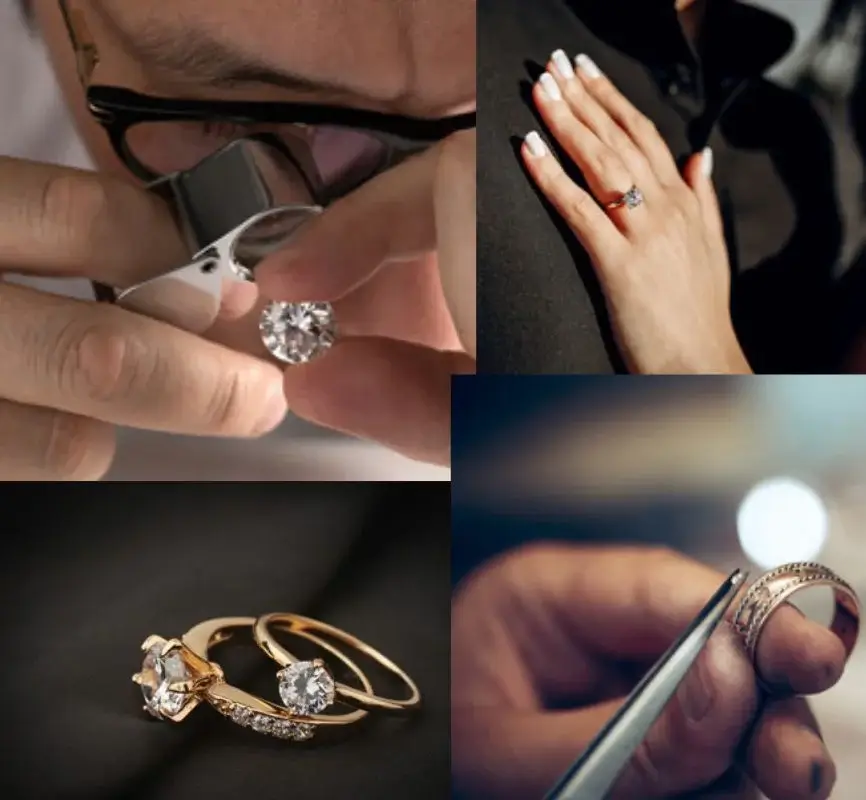
Many inclusions cannot be seen with the naked eye. To identify them, a diamond expert examines the stone under 10x magnification. Accurately determining diamond clarity therefore requires specialist expertise and an experienced eye.
Diamond clarity is assessed according to three main factors: the number of inclusions, their type and their size. The GIA diamond clarity scale includes the following grades:
FL – Flawless / IF – Internally Flawless: no inclusions or blemishes / no internal inclusions visible under 10x magnification
VVS1, VVS2 – Very Very Slightly Included: inclusions are extremely difficult to see under 10x magnification
VS1, VS2 – Very Slightly Included: inclusions are visible under 10x magnification but generally not to the naked eye
SI1, SI2, SI3 – Slightly Included: inclusions may be noticeable, depending on their size and position within the stone
I1, I2, I3 – Included: inclusions are generally visible to the naked eye
In practice, many inclusions remain difficult for an untrained eye to detect. Their position within the stone is also an important factor: generally, the fewer and less noticeable the imperfections, the higher the diamond’s value.
What Does Diamond Cut Mean?
The quality of a diamond’s cut determines its fire, brilliance and sparkle. It is one of the most important characteristics of the 4Cs because it directly affects how effectively the stone interacts with light. If a diamond is poorly cut, it can appear dull and even smaller than its actual carat weight suggests.
Cut is also the only one of the 4Cs that is directly influenced by human craftsmanship.
First developed in 1919 by mathematician Marcel Tolkowsky, the modern round brilliant cut remains a benchmark for maximising a diamond’s brilliance. To assess cut quality, diamond experts consider three key criteria:
Polish: evaluates the quality of the facet surfaces and identifies possible polishing lines, scratches or other surface imperfections
Symmetry: assesses how precisely the facets align, whether any extra facets are present, and whether the culet and table are correctly centred
Proportions: determine the balance between the different parts of the diamond, including the table, crown, girdle and pavilion
These elements must work together harmoniously to allow the diamond to reflect and return light as effectively as possible.
Fluorescence and Shapes: Other Diamond Characteristics to Know
Some diamonds, whether mined from the earth or recovered from alluvial deposits, contain particles that produce a visible glow when exposed to ultraviolet (UV) light. This phenomenon is known as diamond fluorescence. It results from an interaction between light energy and atoms within the diamond, linked to the presence of nitrogen and other impurities in its crystal structure. The resulting glow can appear in different colours, with blue being the most common.
Fluorescence is indicated on diamond grading reports and is generally classified as None, Faint, Medium, Strong or Very Strong.
For higher colour grades such as D, E and F, strong fluorescence may sometimes be considered less desirable, as it can occasionally affect the diamond’s visual transparency. Conversely, for lower colour grades, particularly from I onwards, stronger fluorescence can sometimes be an advantage: its bluish effect may help counterbalance the diamond’s natural yellow or brown tint.
Fluorescence is rarely the deciding factor when choosing a diamond, but it can have a noticeable impact on its price.
What Are the Different Diamond Shapes?
Although the round brilliant cut remains the most popular diamond shape, there are also many fancy-cut diamonds to choose from:
Marquise: an elongated shape, generally featuring 58 facets. It is said to have been named after the Marquise de Pompadour, for whom Louis XV reportedly commissioned a diamond cut to resemble the shape of her smile
Pear: also generally featuring 58 facets, this hybrid cut combines characteristics of the round brilliant and marquise shapes. It is also known as the teardrop cut
Heart: the ultimate romantic diamond shape, usually featuring between 56 and 58 facets. Its appearance can vary slightly depending on its proportions and cutting style
Oval: typically featuring 58 facets, this shape can visually elongate the fingers and works beautifully as either a centre stone or an accent stone
Emerald: named after the traditional cut used for emerald gemstones, this step-cut shape generally features 57 facets and tends to reveal inclusions more easily, making clarity particularly important
Princess: one of the most brilliant square diamond cuts, typically featuring numerous facets. Its large table also makes good clarity an important consideration
Radiant: a distinctive hybrid cut featuring around 70 facets and cropped corners, combining impressive brilliance with an ability to conceal certain inclusions effectively
Cushion: a square or rectangular shape with softly rounded corners, renowned for its brilliance and particularly popular in fine and high jewellery
Authenticity and Certification: How to Guarantee Your Diamond’s Quality
A gemmological laboratory plays an essential role in verifying a diamond’s quality, acting as an independent trusted third party between the diamond professional and the buyer. The three leading diamond grading organisations are the GIA (Gemological Institute of America), HRD Antwerp and IGI (International Gemological Institute). Other reputable laboratories also exist, such as the AGS in the United States, although it is less commonly used in the European market.
Will Two Laboratories Give the Same Grade for the Same Diamond?
Experience shows that when the same diamond is submitted to different certification laboratories, its grading results may vary slightly from one organisation to another. Even when the same diamond is assessed by the same laboratory several months apart, minor differences in its grading may sometimes occur.
Because some diamond quality criteria involve assessment by trained gemmologists, slight variations in perception can occur from one expert to another.
Understanding the differences between diamond grading reports and certificates can therefore help you assess a diamond’s characteristics and value more objectively.
Why Is a Certificate Number Laser-Inscribed on a Diamond?
A magnifying loupe or microscope can be used to identify the certificate number laser-inscribed on the diamond. This inscription makes it possible to verify that the diamond matches the official grading report issued by the certification laboratory.
Today, several internationally recognised diamond laboratories use laser inscriptions as an additional means of identifying certified diamonds and linking each stone to its corresponding grading report.
Why Obtain an Accredited Valuation Report When Buying a Diamond?
A diamond valuation report is a document used to establish the retail replacement value of your diamond, indicating its estimated value within the retail jewellery market.
Do not be surprised if the value stated on your appraisal certificate is higher than the amount shown on your invoice. This difference can be explained by Celinni’s position as a diamond wholesaler, allowing the Maison to offer prices that may be lower than those typically found in traditional retail jewellery stores.
This insurance valuation can help you insure your diamond with your insurance provider and provide useful documentation when planning the future transfer or inheritance of your assets.
Why Choose a Diamond from Maison Celinni?
A diamond’s brilliance is determined by two main factors: the quality of the rough diamond and the way the stone is cut. Maison Celinni© diamonds are renowned for their quality and brilliance. Our rough diamonds are carefully selected to offer our clients high-quality stones, featured in our engagement rings as well as throughout our jewellery collections.
What Is a Perfect Diamond?
A diamond of the highest possible quality combines the following characteristics:
Color: D (colorless)
Clarity: FL (Flawless)
Cut: Excellent
Symmetry: Excellent
Polish: Excellent
Fluorescence: None
Diamonds combining all these characteristics are exceptionally rare and therefore extremely valuable. A “perfect” diamond achieves the highest possible grades across all the key criteria used to assess and describe its quality.
Diamond Prices, Investment and Interesting Facts
A diamond’s value depends on several criteria, including the 4Cs — carat weight, clarity, cut and color — as well as other factors such as polish, symmetry, fluorescence and shape. Within the professional diamond industry, prices are generally quoted per carat, with the Rapaport Price List commonly used as a market reference.
Average diamond price per carat according to weight:
| Average Weight | Average Price per Carat |
|---|---|
| Under 0.50 ct | €2,030 |
| 0.51 to 0.99 ct | €3,370 |
| 1.00 to 1.49 ct | €6,190 |
| 1.50 to 1.99 ct | €9,040 |
| 2.00 to 2.99 ct | €12,680 |
| 3.00 to 3.99 ct | €17,200 |
| 4.00 to 4.99 ct | €21,970 |
| 5.00 ct and above | €30,160 |
These prices are provided for guidance only and represent a snapshot of the diamond market. They are calculated according to current supply and demand within each carat-weight category and may change regularly.
Why Are Natural Coloured Diamonds So Expensive?
A coloured diamond is a diamond whose natural colour falls outside the traditional white-to-tinted range. There are 27 recognised hues, including yellow, red, green, violet and pink. Their extreme rarity makes natural coloured diamonds unique and highly sought-after by collectors.
When purchasing a natural coloured diamond, it is advisable to consult a specialist diamond dealer with direct connections to the main sources and international diamond markets.
What Are the Most Famous Diamonds in the World?
Some exceptional diamonds have become famous for their historical significance, extraordinary size and extreme rarity, each with its own fascinating and sometimes turbulent history.
Among the world’s most famous diamonds are the Cullinan Diamond, the Great Star of Africa, the Hope Diamond, the Koh-i-Noor, the Golden Jubilee Diamond, the Orlov Diamond, the Regent Diamond and the Sancy Diamond.
How Do You Become a Diamond Dealer?
To become a diamond dealer, it is advisable to study gemmology at a recognised institution, such as the ING in Paris, HRD Antwerp, or the GIA in the United States.
The first step is to develop an in-depth technical understanding of diamonds and their characteristics. This knowledge should then be complemented by practical experience of the diamond market through internships and professional training in France and abroad.
Working as a diamond dealer is a fascinating profession that combines technical expertise, gemmology and international trade, while providing opportunities to discover different cultures through exchanges with professionals around the world.
What Budget Should You Set for an Investment Diamond?
An investment diamond refers to a diamond purchased with the aim of preserving or potentially increasing capital over time. Historically, certain categories of high-quality natural diamonds have experienced periods of price appreciation. As part of a diversified asset strategy, some buyers may therefore choose to hold a small number of carefully selected stones.
We generally recommend focusing on diamonds weighing between 0.50 and 1.50 carats with strong grades across the 4Cs: carat, color, clarity and cut.
Important notice: Celinni does not consider diamonds to be a standalone financial investment. They should only be viewed as a potential means of asset diversification and approached cautiously as part of a broader wealth management strategy. Past diamond price trends do not guarantee future appreciation.
Frequently Asked Questions About Diamonds
What is a diamond?
A diamond is a mineral composed of carbon. It is the hardest naturally occurring material, with a rating of 10 on the Mohs scale, and one of the most popular gemstones used in fine jewellery. Because of its exceptional hardness, diamond also has numerous industrial applications.
How much does a diamond cost?
The average price of a one-carat diamond is approximately €6,200, while a 1.50-carat diamond averages around €9,000. Diamonds weighing 2.00 carats or more generally start at approximately €12,600 per carat according to the indicative figures presented in this guide. The final price depends heavily on the 4Cs — carat, color, clarity and cut — as well as the diamond’s shape and other characteristics.
How can you have a diamond professionally valued?
Many jewellery stores offer a diamond appraisal service, usually carried out by a qualified expert. You can make an appointment to have your jewellery assessed in person or submit your diamond to an independent gemmological laboratory or professional appraiser for evaluation.
What Are the 4Cs of a Diamond?
The 4Cs of diamonds are carat (weight), color, clarity and cut. Together, these four internationally recognised criteria are used to assess a diamond’s quality and play a major role in determining its value.
Can a diamond break?
Yes. Although diamond is the hardest naturally occurring material, with a rating of 10 on the Mohs scale, hardness does not make it indestructible. A diamond can chip or break if it receives a strong impact, particularly along a cleavage plane.
Why are some diamonds more expensive than others at the same carat weight?
A diamond’s price depends on the combination of its quality characteristics. Two diamonds with the same carat weight can have very different prices depending on their color, clarity, cut, fluorescence, proportions, certification and shape. A higher-quality stone will generally command a higher price than a diamond of the same weight with lower grades.
How can you check whether a diamond is authentic before buying it?
Ask for a diamond grading report issued by a recognised independent laboratory, such as the GIA, HRD or IGI. When the diamond has a laser-inscribed report number, you can also check that the number on the stone corresponds to the number shown on its grading report.
CUSTOMER TESTIMONIALS
ON YOUR DIAMOND
Read our customer testimonials

NEWSLETTER
Sign up to receive the latest news regarding
the products and services CELINNI, and much more.
This website uses its own and third-party cookies to improve our services and show you advertising related to your preferences by analyzing your browsing habits. To give your consent to its use, press the Accept button.
Cookie preferences
| Cookie | Provider | Purpose | Expiry |
|---|---|---|---|
| PHP_SESSID | www.celinni.com | The PHPSESSID cookie is native to PHP and allows websites to store serialised status data. On the website it is used to establish a user session and to pass state data through a temporary cookie, which is commonly known as a session cookie. These Cookies will only remain on your computer until you close your browser. | Session |
| PrestaShop-# | www.celinni.com | This is a cookie used by Prestashop to store information and keep the user's session open. It stores information such as currency, language, customer ID, among other data necessary for the proper functioning of the shop. | 480 hours |


.png)


.avif)


